
This past year has been so busy with family and traveling that writing has taken a backseat. It’s been two years since I retired and life has been a whirlwind…finding new love, remodeling and setting up a winter home in Tucson, buying the Scamp and planning camping adventures in 13 states, getting married, and vacationing in North Carolina, Maryland, and the Canadian Rockies. Whew, I get tired just reading the list of things we’ve accomplished!
After the pandemic started, I couldn’t wait to retire. Who knows how much time we have left on this earthly plane, I thought, so I set a retirement date and put my plan in action. It has turned out far better than I ever could have imagined…I’m living the dream.
The trouble is whenever you move or do something different, you always bring yourself with you…the good stuff and the quirks and habits that don’t serve your greater good. When I worked, I lived a very structured, routine life that carved out time for writing. That has been my biggest struggle in retirement.
I don’t have a routine. It’s hard to structure your day when each one can be different, depending where you are and who you’re with. Could I have made my writing a priority to the exclusion of others? Yes, but I felt it was a higher priority to go with the flow and see what life brings.
For now, we’ve settled back in Tucson and I’m trying to write a little every day…even if it’s just one or two sentences. It keeps it top of mind and gets the writerly juices going again.
The one thing I have made a conscious effort to do more of is read, whether through Audible, Kindle, my library app, or my favorite, a book I can hold in my hands. I use Goodreads to keep track of the books I’ve read and last year I finished 22.
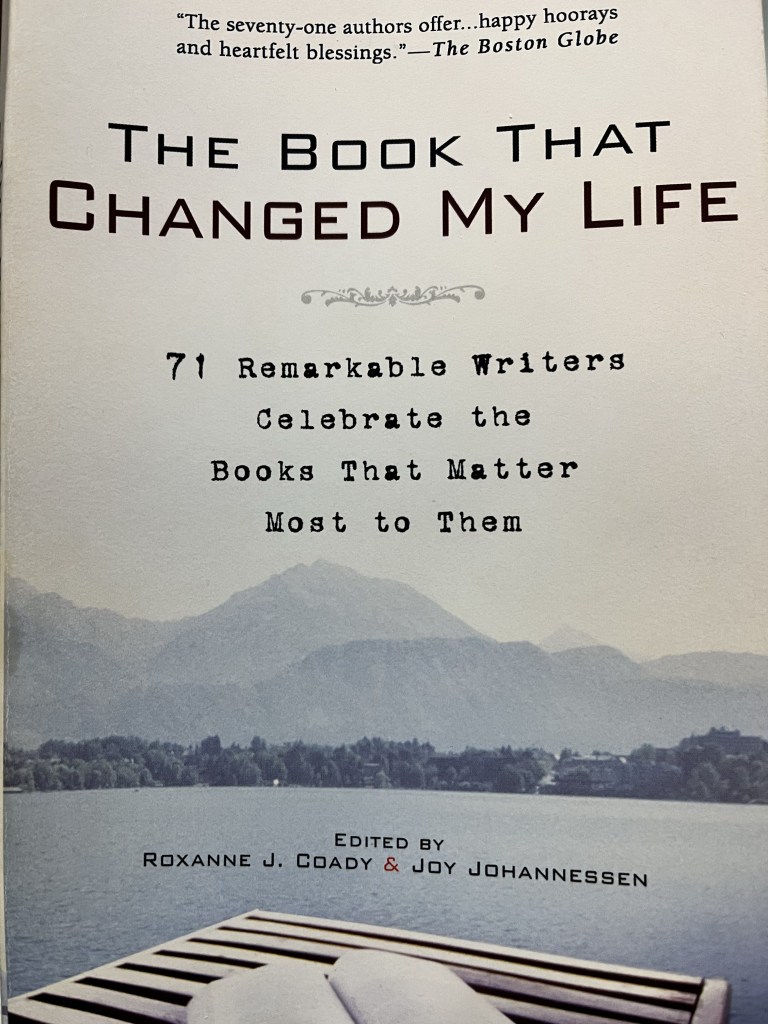
This year, I set a goal of 25. I just finished the 24th, The Book That Changed My Life: 71 Remarkable Writers Celebrate the Books That Matter to Them. Published in 2006 and edited by Roxanne J. Coady and Joy Johannessen, it contains essays from authors in alphabetical order. Since it was published 17 years ago, there were many authors I didn’t know, but included such notable authors as Anne Lamott, SARK, Carol Higgins Clark, Doris Kearns Goodwin, Patricia Cornwell, and Frank McCourt.
Loaned by my friend Steph who shares a love of books about writing, I wasn’t sure what to expect. I found it a fascinating read and put many of their suggestions on my GoodReads “To Read” list. I also found some of their choices surprising. For example, Patricia Cornwell, who writes a series about medical examiner Kay Scarpetta solving crimes lists Harriet Beecher Stowe’s Uncle Tom’s Cabin as the book that changed her life. She cites Stowe may be an ancestor on her father’s side of the family. The title of her essay, “The Original Sin,” is powerfully brought home at the end of the essay where she writes, “…our shared belief that all unfairness, harshness, and inevitable violence are born of the same original sin: the abuse of power, the ultimate result of which is enslavement, impoverishment, suffering, and death.”
I was disappointed to see that none of the authors mentioned, Man’s Search for Meaning by Viktor Frankl, though one of the editors mentioned it in the appended list she “reads, rereads, and always keeps near at hand.” That was the book that changed my life.
While taking undergraduate classes at Mira Costa Junior College while I was in the Marine Corps, the book was required reading in my Philosophy 101 class. A holocaust survivor, Frankl writes about daily life in the Nazi death camps. What I found so compelling was his comparison between those who had a woebegone attitude and those who remained hopeful, helping others the best they could. I had always felt like my life would be colored by the stigma of my mother’s mental illness.
Frankl spoke of men who didn’t define themselves as prisoners but looked forward to a better life. I remember thinking when I first read the book, if he can survive something like that, what I’m going through is nothing. The book helped me understand that my attitude impacted the quality of my life more than any other external factor. Man’s Search for Meaning is still my favorite and is on my bookshelf today.
What is the book that changed your life? If you’re retired, how have you found meaning in your post-work life?
 Deb Sinness, Author